
Advertisement feature — this page is published by Scentech.
Ultrasonic vs nebulising diffuser: water, noise, reach and running cost
Two technologies do almost all the work in this category, and the shop shelf hides which is which behind ceramic and bamboo. One of them fills a tank with water. The other never sees water at all. Everything that people like or dislike about a diffuser after six months — the reach, the noise, the refilling, the bill — follows from that single fork.
This page sets the two side by side on the figures British sellers and manufacturers actually publish, read on 9 September 2026, with "not stated" wherever nobody says.
What each one does to the oil
Ultrasonic
A ceramic plate under a tank of water vibrates fast enough to throw water into the air as a cool fog, carrying whatever oil you dropped in with it. Almost every machine on the British high street works this way, and the sellers are open about the method. John Lewis prints it on the page for its own Electric Diffuser: fill the tank with 100 ml of clean water, then add two to three drops of essential oil. Tisserand says its Aroma Spa "uses ultrasonic technology" and holds 100 ml. Beurer's LA 40 takes a few drops of water-soluble aroma oil into a tank of up to 180 ml.
So what leaves the machine is mostly water. The scent is a passenger, and a diluted one.
Nebulising and other waterless machines
No water and no heat. The oil itself is broken into a dry, fine mist, so what leaves the machine is fragrance rather than damp air. Classic nebulisers do this by pulling the oil up a glass tube on a jet of air; other waterless designs reach the same result by different means. Scentech calls its own method cold-air diffusion and describes it as turning pure fragrance oil into a dry, fine mist without water and without heat.
Because nothing dilutes the oil, a waterless machine reaches further on a given amount of it and empties faster. That is the whole bargain in one sentence.
Water: the tank, the limescale and the daily advice
The tank is not a detail. It is a small appliance you agree to look after. The US Environmental Protection Agency, in its guidance on home humidifiers, says ultrasonic and impeller units can disperse micro-organisms and minerals from the tank into the air, and advises emptying the tank and drying it every day. An ultrasonic aroma diffuser works on the same principle at a smaller scale.
Then there is what the water does to the machine. Hard water leaves scale on the plate, and the plate is the part that makes the mist. Tisserand's own product page carries a one-star review from a verified buyer in July 2026 whose complaint is not the mist at all but the lid: she could not get the cover off to refill the reservoir, and found the reservoir held very little water. Refilling is the job you actually do with one of these, and it is the job the photographs never show.
A waterless machine has none of that, and a different chore instead: it takes the maker's own refill, and only that one. Scentech's instructions say never to use water, or oils meant for a water-based diffuser, and other oils fall outside the 1-year warranty. Which of those two chores you would rather have is genuinely a matter of taste.
Reach: what the makers state
Coverage in square metres is where British listings go quiet. Of the machines we read on John Lewis, tisserand.com and homedics.co.uk, only the Beurer LA 40 states a figure at all, at up to 20 m² on the John Lewis product description. The John Lewis Electric Diffuser, the Speckled Ceramic, the Tisserand Aroma Spa, the Ellia Gather and the Stoneglow Perfume Mist all state nothing.
Scentech states up to 40 m² for the Smart Aroma Diffuser, up to 65 m² for the Diffuser 2 and up to 100 m² for the Pro, in the specification tables on its own English product pages. Those are the manufacturer's own claims and a best case, not a promise, and we have measured none of them.
The physics behind the gap is not mysterious. Water dilutes; undiluted oil in a dry mist does not. It is why an ultrasonic machine can be pleasant a metre away and undetectable at the other end of the same room, and why the honest use for one is a bedroom, a bathroom or a desk rather than an open-plan ground floor.
Noise
Both technologies hum, and almost nobody prints a number. Not one of the six British machines we read publishes a decibel figure. Scentech publishes ± 59.5 dB for the Smart Aroma Diffuser, which it calls quiet and compares to a calm conversation, and ± 39.5 dB for the Diffuser 2 and the Pro, which it calls whisper-quiet.
Twenty decibels is a large gap in a bedroom. If a machine's page gives no figure, the only source left is the reviews, so search them for the word noise before you buy rather than after.
Running cost
The arithmetic runs opposite ways for the two technologies, and the tempting conclusion is the wrong one.
An ultrasonic machine is cheap to feed. Two or three drops per fill, from a bottle at £0.50 to £1.28 a millilitre at Holland & Barrett on 9 September 2026, is pennies. No British seller states how many hours a fill of oil lasts, so a monthly figure cannot honestly be printed, but nobody is bankrupted by it. The costs are the water routine and, eventually, the machine.
A waterless machine is the reverse: nothing to fill, and a refill you cannot shop around for. A Scentech ScentPod 2.0 is 65 ml for about £27.00, converted at checkout, September 2026, which is £0.42 a millilitre, and the maker states one to three months per pod — well over two months at 12 hours a day on a medium setting, still about a month at 16 hours a day on the highest. At the medium figure that is roughly 4p an hour and about £13 a month; at the high one, closer to £27.
For scale, Yankee Candle prices its Original Large Jar at £29.99 for up to 150 hours on its own site, about 20p an hour, and Jo Malone London's 200 g candle is £56.00 for a stated 45 hours at John Lewis, about £1.24 an hour. Both are our arithmetic on the sellers' own numbers.
Which one suits which room
| Ultrasonic | Waterless or nebulising | |
|---|---|---|
| What goes in | your own bottles, two to three drops per 100 ml | the maker's blend or pod, only |
| Reach | rarely stated; 20 m² is the only British figure we found | stated up to 40, 65 or 100 m² by Scentech |
| Upkeep | fill, empty and dry the tank; limescale | none; buy the refill |
| Machine price | £39.99 to £65.00 at the sellers above | about £101 to £193, converted at checkout, free from five scents |
| Refill price | £0.50 to £1.28 a millilitre | £0.42 a millilitre |
| Noise stated | by none of the six we read | ± 59.5 or ± 39.5 dB |
A bedroom, a bathroom, a small study, or a household that wants to choose the plant in the bottle: ultrasonic, and keep to the daily rinse. A living room that opens onto a kitchen, a hallway that has to smell of something at the far end, or anyone who has already given up on refilling once: waterless, and accept that you are buying into one brand's refills for as long as you own it.
If that lands you on the second answer, the machine we would buy and why is on the front page, and the bottle question that comes first is in which essential oils work in a diffuser.
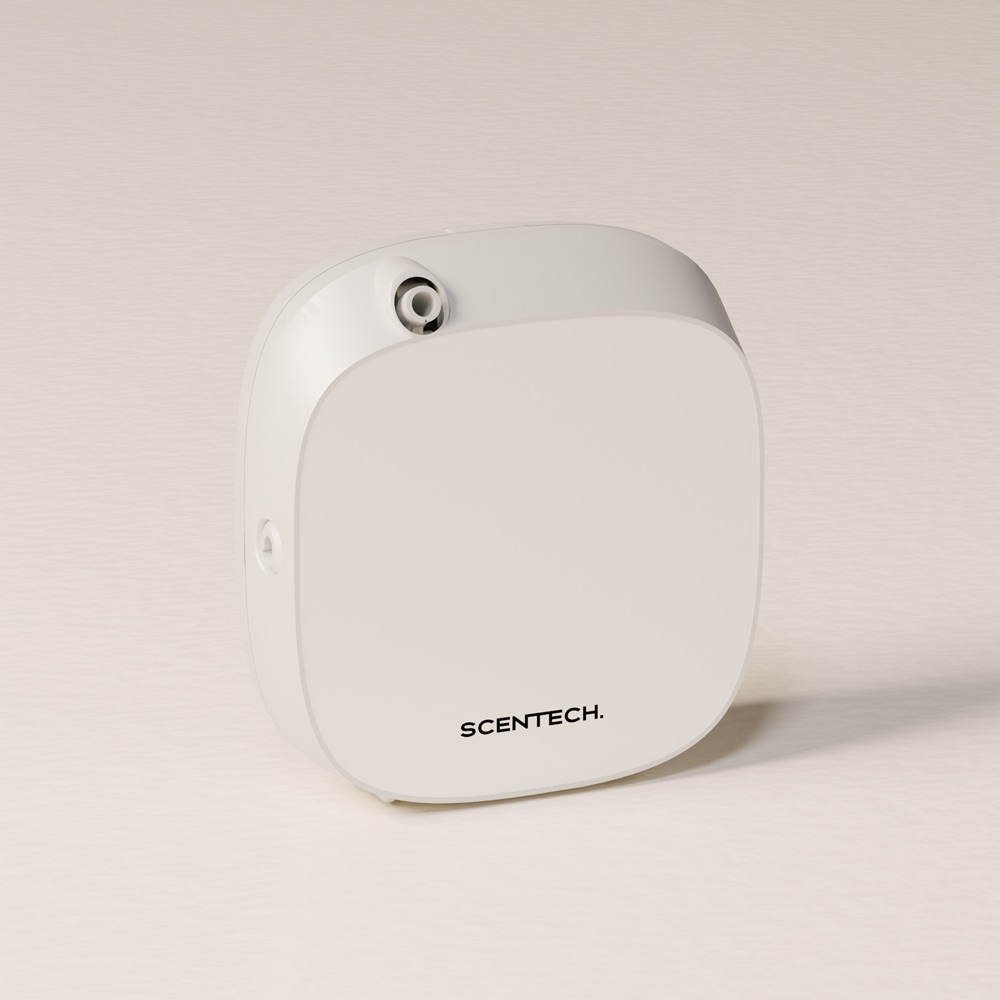
About £27.00 for a sealed 65 ml pod, converted at checkout, September 2026, roughly £0.42 a millilitre, and the machine free from five scents: the Diffuser Lite at five, the Diffuser 2 at seven, the Pro at nine, on the offer page only. 30-day returns · 1-year warranty · ships from the Netherlands; UK availability and cost are shown at checkout.
Advertisement See the offer at Scentech